This story comes from our Fall/Winter 2025 Ambassador, Paul K.
I’ve written several articles containing this bike and many of these words, but I haven’t fully encapsulated how it threads into the fabric of my lifestyle. I have a hard time letting go of good things. There was a time in my life when I valued a “like-new” state as if I were constantly about to list my possessions on the internet for lowballers to click on. I have a vivid memory of a new climbing T-shirt getting sucked into my belay device on its very first outing. I remember thinking, "Seriously, this thing was brand new." Now that same shirt is threadbare, tattered, and covered in holes. It has what the young kids call aura. Do I worry that one big dead point is going to split it at the seams? Yes—and I welcome such a moment.
 Photo by Jenn Maurer
Since those early days of my climbing career, the ones where I feared scratches and dents in my expensive gear, I’ve matured. Now, a dent means I can finally use that water bottle. A mystery stain on my work pants betrays their use. A scratch in my truck’s paint shows that my all-terrain tires have actually come into contact with all the terrains.
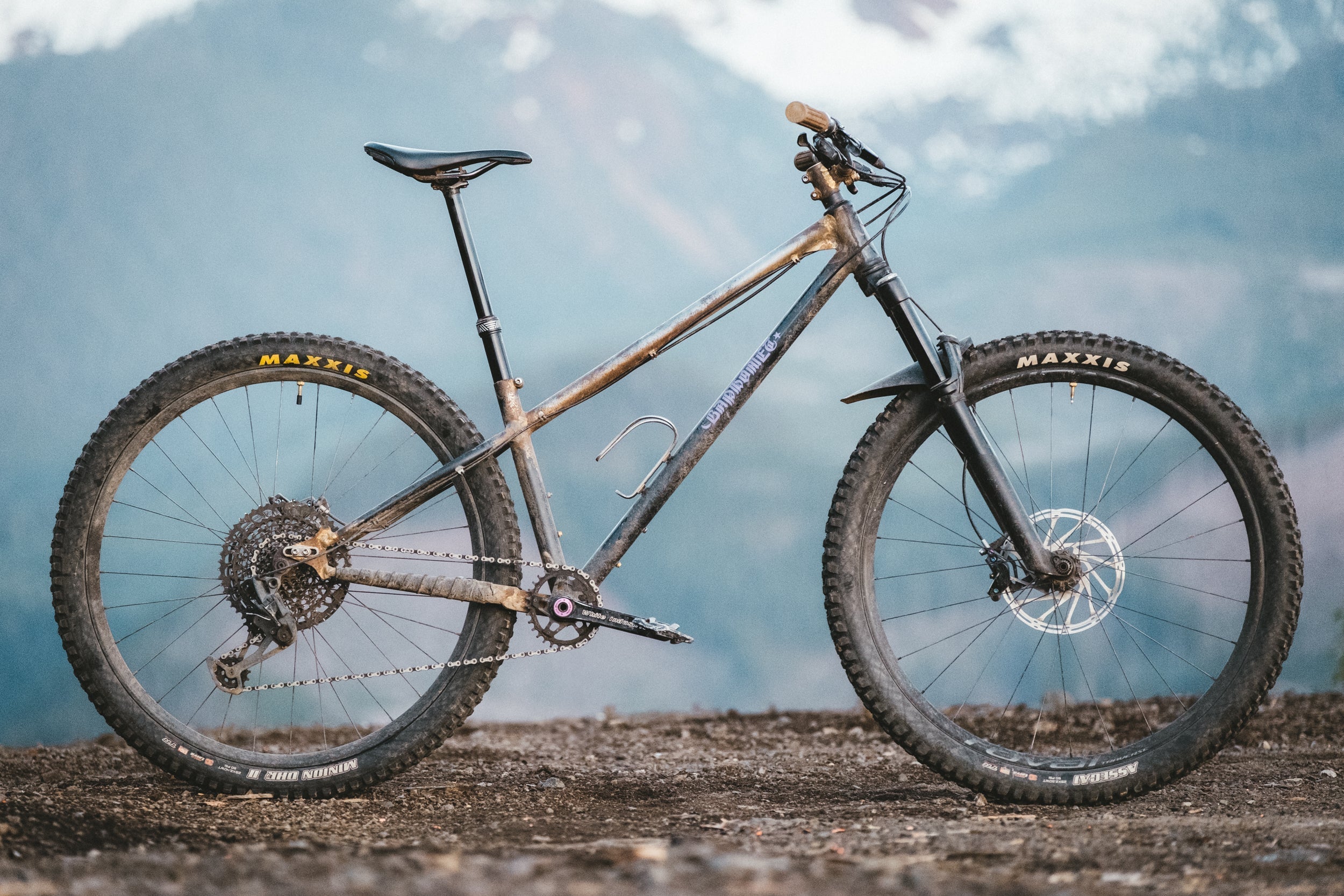
I’m content to write that I no longer participate in preservation. I participate in the use, enjoyment, and patinafication of that which is good. My favorite clothes are worn in—heavily. My favorite shoes are scuffed, beat, and frankly in the final throes of life. My favorite car is thirty years old and currently has moss growing in the taillight. My favorite bike is this one. It refuses to die, no matter how many sideways landings, terrible tail whips, or cracked tubes I subject it to. Largely, this is because of my best friend, Dillen Maurer, who insists on keeping it going.
My friend Dillen builds bicycle frames. He made this bike for a friend. That friend enjoyed it. He enjoyed it so much that he had to send it back to Dillen for repair; the top tube and both chainstays had failed. Dillen decided to make him a new bike, and this one hung on the wall in his garage until I came along. We debated whether it would fit me, as it was slightly smaller than the bike I was riding at the time. We pondered long enough that we decided to repair it, build it up, and see if the geometry and I got along. Naturally, we repaired the chainstays using steel sourced from the recycling bin—off-cuts and mystery chunks that appeared usable. Dillen suggested I take a stab at brazing it back together. We chose to practice by making a slingshot. After my best attempts at creating a rock chucker that wouldn’t send mystery metal into my eye socket, Dillen gently suggested that my skills would be better applied to slingshots and not bicycles. Once we were sure all the tubes were properly misaligned, Dillen set them into a state of near permanence using melted bronze. Now it was time to figure out if the bike and I got along. Tragically, we did.
Not only did we get along, but I loved riding that bike more than any other mountain bike. While full-suspension bikes offer a luxurious ride, I find them a bit tame. A hardtail offers a very different experience—less forgiving, demanding greater control, choosier lines, and a generally more involved ride than its technologically advanced counterparts. I’ve never ridden a bronco (just look at me and you can tell), but I imagine riding a hardtail is closer to that experience than the carbon-fiber full-suspension bike I had been riding. I sold that other bike and committed to taming this silly little steel hardtail.
 Photo by Jenn Maurer
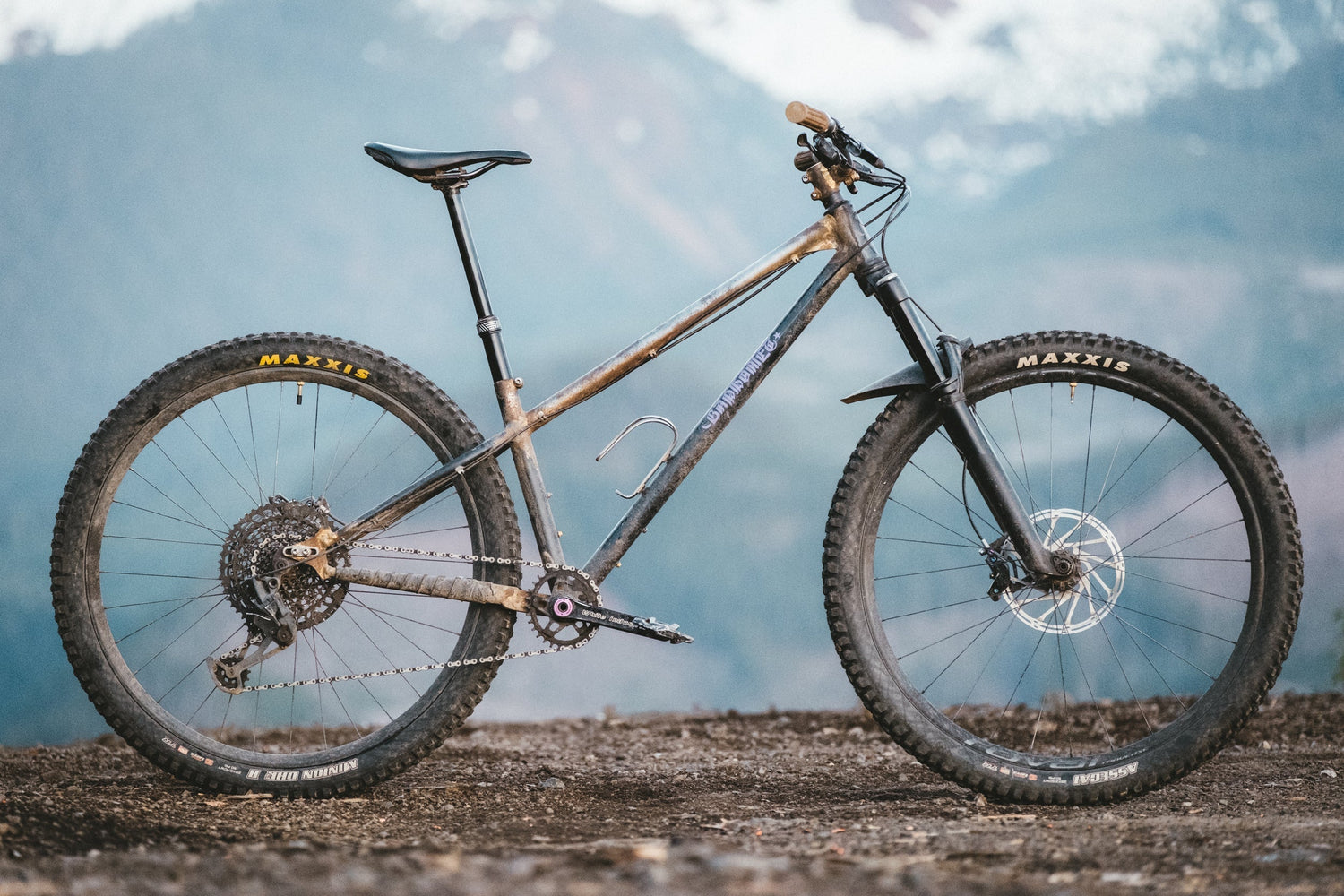
Why do I love this bike? It has character and personality that so many bikes just don’t. You can tell that a human made it. A human who sneezes, laughs, loves, and teases his friend for the crappy slingshot he made. The brazed joints are far from perfect. Tubes meet asymmetrically. Paint job? It had one. It also rides well. It’s not fast. It’s not slow. It’s not stable. It’s playful and poppy. I didn’t realize how much I wanted something fun to ride and fun to look at. It has a patina I love. In the bike world, we call this “beausage”—a smooshing together of beauty and usage that describes the aesthetic charm a bike earns through miles of mud, roots, rocks, and weather.
How does this pertain to GEAR AID, a company that makes patches and adhesives, not bicycles and sticks of bronze? They participate in this same ethos: the personification of gear. Much of my most loved clothing and bags have been repaired with their products. My rock-guiding pack, the one I’ve used for years, has an entire interior panel reinforced with poured tubes of Aquaseal. The jacket I wore to this coffee shop has fresh seams glued back together. I’m writing this in a pair of pants I’ve had for seven years. They’re full of patches. Even now, I can feel cold air creeping in through a long split in the left butt cheek. While I’ve enjoyed the novelty of a fresh piece of kit, the satisfaction of making things last, work, and perform far surpasses the instant gratification that comes with the new. As a company, GEAR AID is guided by the belief that good things can continue to be good through the rough and tumble. Making things last is the responsible decision. It’s a sustainable and satisfying choice to keep that jacket long past the lifespan dictated by its delicate seams.
 Photo by Jenn Maurer
Anybody can have that jacket off the rack. Nobody can have that exact jacket with that exact hole in the side from a hilarious crash off the bike. In the same way we develop our personality, traits, habits, and character from both the good and the bad, our apparel, gear, and bicycles do the same. Unfortunately, I think most people don’t give their things the time or space to earn this personification. Choosing a steel bike—a material that is, in many ways, infinitely repairable—was my decision to participate in it. Am I privileged enough to have a friend willing to play this game? Yes. Do other people have the opportunity to buy a more affordable steel hardtail and do much the same? Also, yes—and I encourage you to do so.
Apparently, I have a style of riding that seatstays hate. And I don’t mean that I throw sick whips or big air. I mean that I like to splash my friends with puddles on the road and land tiny trail doubles a bit more sideways than I ought to. Within a few months of riding the Rustcycle—a name derived from its lack of paint and the ample mud and water I subjected it to—I cracked the brake-side seatstay. We took it back to Dillen’s workshop, added a brace, and filled the crack. Back to the trails it went, until the other seatstay failed similarly. At the moment, the frame is sitting in my home. It has a fresh brace, mismatched to the one on the other side, of course, and a poorly applied clear coat over the rusted, patterned raw steel to keep the tubes from meeting an untimely, rusty end. I chose to leave it unpainted, preserving the stories told through stains and scratches. I’m eager to build it back up and keep riding it.
One day, if I break it enough, I’ll have the opportunity to make another slingshot.
If something is worth loving, it’s worth fixing.
Thank you to Jenn Maurer for taking all of the photos of Dillen and me making terrible decisions in the workshop.
— Paul K., GEAR AID Ambassador